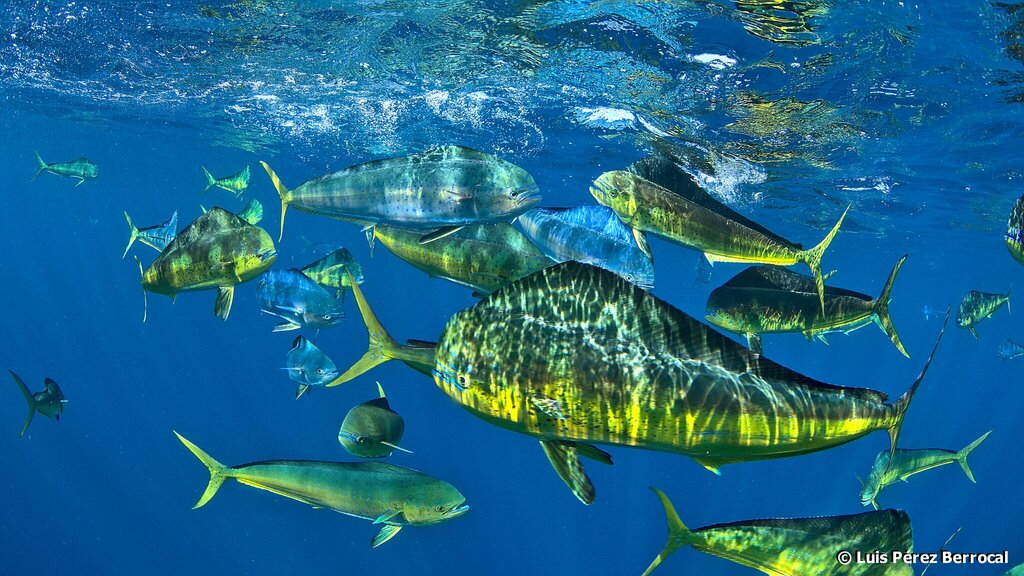
Mahi Mahi
Coryphaena hippurus
Mahi mahi are fast-growing, brilliantly colored offshore fish known for acrobatic fights and excellent table fare. They are highly aggressive feeders, making them one of the most exciting and rewarding catches in saltwater fishing.
Ideal baits
What to put on the hook
Ballyhoo
Top bait for trolling; rig whole behind a skirt for best results
LiveSquid
Excellent live or fresh-dead; mahi can't resist it near structure
LiveDolphin Fish Lure / Feather Skirt
Troll in bright colors like pink, green, or blue at 6-9 knots
ArtificialPilchards / Sardines
Chunk or live-line near floating debris or weed lines
LiveBucktail Jig
Cast near weed lines and retrieve fast with erratic pops
ArtificialFish Attractant Spray
Apply to artificial lures to increase strikes in clear water
Scent
Easiest way to catch it
Step by step
- 1
Head 10-30 miles offshore and look for floating debris, weed lines, or color changes in the water
- 2
Troll a rigged ballyhoo or feather skirt at 6-8 knots along the weed line or near debris
- 3
When a fish strikes, keep the boat in gear briefly to let the hook set, then stop
- 4
Fight the fish with steady rod pressure; expect jumps so keep your rod tip up
- 5
Once one mahi is hooked, keep it in the water — others will follow; cast a live bait to the school
- 6
Use a gaff or large net to land the fish, as mahi are energetic right up until the boat
Recommended rig
Ballyhoo Trolling Rig
A simple and effective offshore trolling setup that mimics a fleeing baitfish and can be used with or without a skirt.
- Start with 30-50 lb monofilament or fluorocarbon leader, 6-10 feet long
- Attach a 5/0 to 7/0 circle hook to one end of the leader using a loop or Uni knot
- Thread a small egg sinker (1/4 oz) or use a chin weight to keep the bait running straight
- Pin the hook through the lower jaw of the ballyhoo and run the point just past the dorsal fin
- Optionally slide a colorful vinyl skirt over the head of the ballyhoo before rigging
- Connect the leader to your main line via a swivel or crimp, then set the bait 20-50 feet behind the boat
Best time
Early morning from sunrise to mid-morning is peak; mahi feed actively on the surface and are easier to spot near structure
Season
Late spring through early fall (May–September) in most US Atlantic and Gulf waters; year-round in tropical regions
Where
Open blue water offshore, particularly near floating sargassum weed lines, debris, buoys, or FADs (Fish Aggregating Devices) in 50–300+ feet of water
Water clarity
Clear to very clear blue or blue-green offshore water; color changes or temperature breaks are prime spots
Pro tips
- • Never pull a hooked mahi fully into the boat until you're ready — keep it in the water and toss a live bait to the school before boating it
- • Mahi are curious and bold; if you spot one near a weed mat, cast well past it and retrieve fast past the structure to trigger a strike
- • Watch for birds diving over the water — frigate birds and terns often hover above schools of mahi chasing bait to the surface
Fishing for Mahi Mahi today?
Tell us your conditions
Your plan
Tell us what the weather and water look like, and what you're seeing. We'll suggest the bait, colour, depth and retrieve that fits this exact moment.