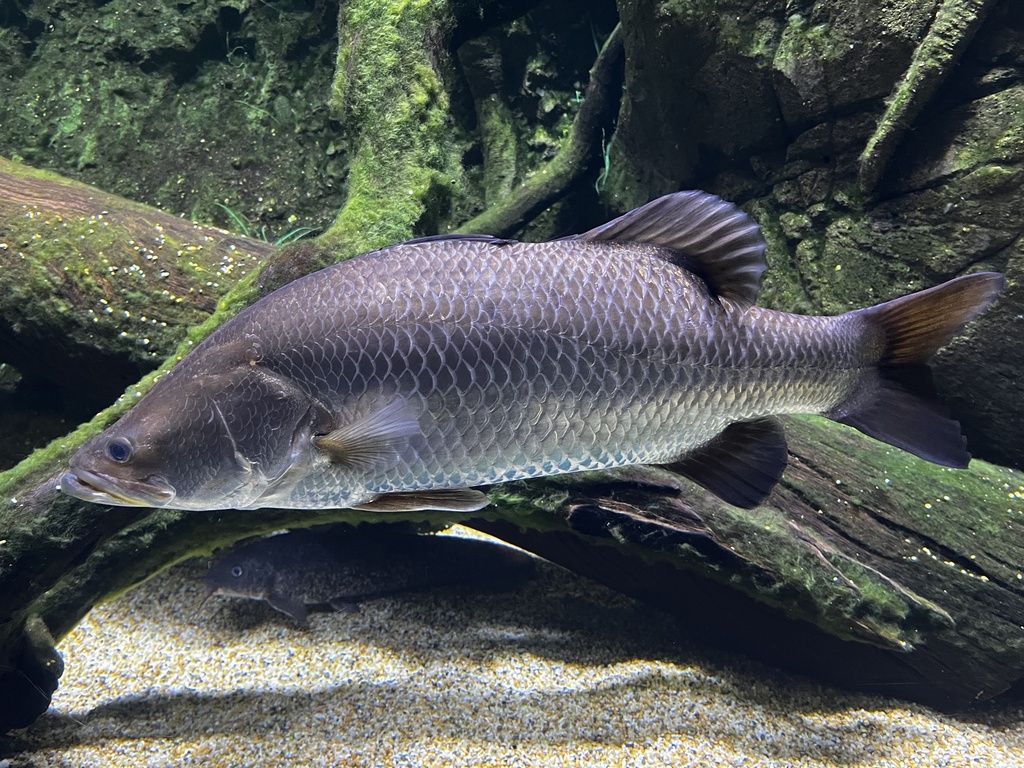
Barramundi
Lates calcarifer
Barramundi are highly prized sportfish found across northern Australia and Southeast Asia, known for explosive strikes and acrobatic jumps. They inhabit both freshwater rivers and estuarine saltwater systems, making them a versatile and exciting target.
Ideal baits
What to put on the hook
Live mullet or herring
Top choice; barramundi can't resist a lively baitfish near structure
LiveSoft plastic lure (paddle tail)
Work it slowly near snags and rocky edges at dawn or dusk
ArtificialBibbed minnow hardbody
Cast parallel to structure and retrieve steadily with occasional twitches
ArtificialLive prawns
Excellent in estuaries, especially on an incoming tide
LiveSurface popper
Thrilling topwater action at low light; walk the dog across calm flats
ArtificialScented curl tail grub
Good backup when fish are finicky; scent triggers hesitant barra
Scent
Easiest way to catch it
Step by step
- 1
Step 1: Find structure such as fallen timber, rock bars, bridge pylons, or mangrove edges in an estuary or river mouth
- 2
Step 2: Rig a soft plastic paddle tail on a 1/4 to 1/2 oz jig head using 30-50 lb fluorocarbon leader
- 3
Step 3: Cast past the structure and let the lure sink to near the bottom
- 4
Step 4: Retrieve slowly with occasional lifts of the rod tip to mimic a wounded baitfish
- 5
Step 5: When you feel a solid thump or the line tightens, set the hook firmly and keep rod pressure on to prevent the fish from reaching snags
- 6
Step 6: Use a landing net or wet hands to handle the fish carefully, as gill plates are sharp
Recommended rig
Jig Head Soft Plastic Rig
A simple and effective rig for targeting barramundi around structure in both fresh and salt water. The fluorocarbon leader provides abrasion resistance against rocks and snags.
- Spool your reel with 20-30 lb braided line for sensitivity and casting distance
- Tie a 1-meter length of 30-50 lb fluorocarbon leader using an Albright or FG knot to the braid
- Attach a 1/4 to 1/2 oz jig head (size 2/0 to 4/0 hook) to the leader with a loop knot to allow free movement
- Thread a 4-5 inch paddle tail soft plastic onto the jig head hook, keeping it straight to avoid spinning
- Check the hook point is exposed and the plastic sits flush against the jig head collar
Best time
Early morning (first two hours after sunrise) and late afternoon into dusk; barramundi are ambush predators most active in low light conditions
Season
Wet season and build-up months (October to March in Australia) produce the most active fish; they also feed heavily pre-storm and on a rising tide year-round
Where
Mangrove-lined estuaries, tidal river systems, freshwater impoundments, rock bars, bridge pylons, submerged timber, and creek mouths; always look for hard structure
Water clarity
Barramundi tolerate murky to clear water; slightly turbid tidal water is ideal as it brings baitfish and reduces fish wariness
Pro tips
- • Always fish the tide change, especially the first two hours of an incoming tide pushing baitfish into mangrove edges where barra lie in ambush
- • Barra have razor-sharp gill plates — always use a 30 lb or heavier fluorocarbon leader or you will lose fish on straightforward strikes
- • When a barramundi jumps, bow to the fish by quickly dropping your rod tip toward it to create slack — this prevents the hook from being thrown during aerial acrobatics
Fishing for Barramundi today?
Tell us your conditions
Your plan
Tell us what the weather and water look like, and what you're seeing. We'll suggest the bait, colour, depth and retrieve that fits this exact moment.